Ragwort hysteria

UK Blog documenting the hysteria about this ecologically valuable plant. From an expert who works with major conservation organisations on the subject.

Sunday, 28 August 2016

Rubbish on ragwort on twitter - a reply.


Today's blog posting is a reply to a thread on twitter. A piece of ignorant  nonsense from a user using the pseudonym Tartanroots. 

First of all. Look at this really lovely picture. If you do some research on the pictures on-line you find that this lovely little butterfly is one of those species which is particularly fond of ragwort. It is known to be in decline and the hysteria which is leading to persecution of this plant does not help matters.
Read the tweets and I will comment on them below

Urban Pollinators ‏@ReadingUrbPolls Aug 26
Ragwort is great for butterflies in late summer; here are three Small Copper butterflies having a feast #pollinators
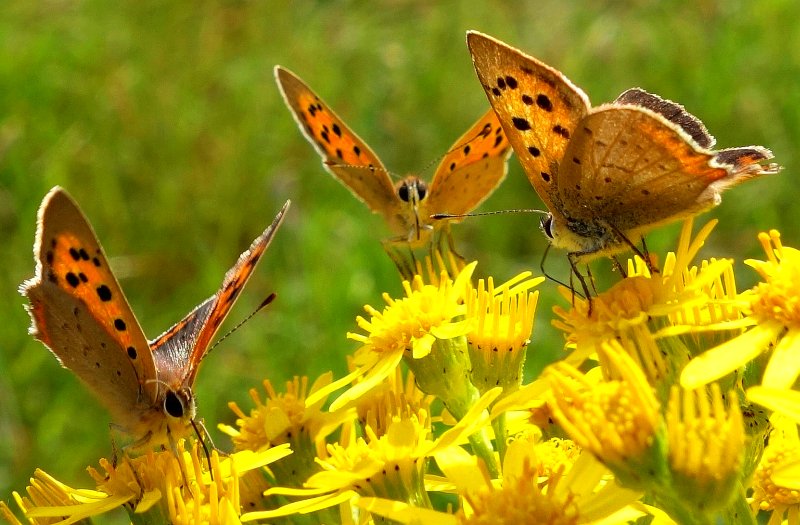
34 retweets 74 likes


  • tartanroots ‏@tartanroots 19h19 hours ago
    @ReadingUrbPolls @Team4Nature300 But it's poisonous to cattle and horses, causes increase in hay fever and destroys habitat for wild flowers
    0 retweets 0 likes

    Urban Pollinators ‏@ReadingUrbPolls
    @tartanroots @Team4Nature300 Only poisonous if it is mixed in with hay, cattle and horses would normally avoid eating it.
    • Retweets 2
    • Likes 4
    • Bill Ellson Sharon Hunter Sardar M Saddozai Team4Nature UK
    2:14 AM - 27 Aug 2016
    2 retweets 4 likes
    Neil Jones Tweet text
    Reply to @ReadingUrbPolls @tartanroots @Team4Nature300 


    1. Julie Stebbings ‏@socrates2sox 7h7 hours ago South West, England
      @ReadingUrbPolls @Team4Nature300 @tartanroots The roe deer visiting my garden eats it - ragwort - with no ill effects. Must be immune!
      0 retweets 0 likes


  • tartanroots ‏@tartanroots 8h8 hours ago
    @ReadingUrbPolls 'Urban Pollinator' says it all!
    0 retweets 0 likes

    To reply to the nonsense. Yes, ragwort together with the thousands of plant species that contain the same class of chemicals can be poisonous to cattle and horses but it rarely poisons them because they co-evolved with these plants and developed resistance. The resistance primarily takes the form of avoiding the plants. There are two problems, significant quantities in hay and cruel starvation where animals will eat anything in desperation. These are both issues for the owners of the animals and do not justify the level of hysteria and persecution of this important plant.

    And before anyone says what about plants that die off. Well the toxins are like paracetamol. There are natural detoxification methods. One of the chemicals, that does this is the same one that makes paracetamol safe as a drug as long as you don't overdose. There are other mechanisms too.
    The idea that ragwort destroys habitat for wildflowers is silly. It is a native wildflower itself. We regularly see the false claim that it is an Invasive Species
    which is a scientific term used to mean a problem foreign plant. Not just a foreign plant , one that is also a problem

     At this point I'll add my standard twitter picture explaining this.
    Ragwort is also one of the most ecologically important of our native flora.

    35 insect species totally rely on  ragwort for food including 7 moth and 7 beetle species;

    Another 83 species are recorded as using ragwort often as a significant food source, with a further estimated 50 species of parasite in turn feeding on those;

    In addition to these 133 species, ragwort is a significant source of nectar for others including bee species that specialise in using yellow flowers and many species of butterfly.

     Government research shows that of over 7,000 plant species in Britain ragwort is the 7th most important nectar-producing plant.

    There is also a question of what happens to deer and I will come back to that as I have an excellent explanatory source, but first I'll explain just a little what I have to keep saying.

    There has been a campaign against ragwort and it is based on a whole load of falsehoods. Bent surveys, false articles, fake statistics, it seems that there is no pseudoscientific perversion they will not stoop to using. They even penetrate government advice as I recently blogged

    We were told that our ragwort was a serious problem in South Africa. This was real news to the botanical recorders there who had no record of it at all!
     
    To give you an idea of how much risk there really is to animals. There is a French scientific paper where animals were deliberately poisoned. Why? because there was such an absence of poisoning records that they genuinely thought French ragwort might be different.  It wasn't.

    The idea has been put around that an animal exposed to the plant will die later, when this isn't necessarily true at all. There is resistance in just about every animal in one way or another.


    Now to come back to deer. Just like any animal if you treat it cruelly and force it to eat large amounts of ragwort in hay where it looses its taste or by starvation where they will eat it in desperation, you can poison it

    This however is an abstract from a scientific paper that explains it clearly.
    I should note that in America our plant is known as tansy ragwort. It is the
    same plant but it isn't native there and thus grows more prolifically and according to research is highly likely to be more toxic.

     This study was conducted to determine the susceptibility of free-ranging black-tailed deer (Odocoileus hemionus columbianus) to tansy ragwort poisoning. The results showed that captive black-tailed deer would not consume tansy ragwort unless they were unable to acquire adequate intake from other food sources. Since some experimental deer consumed an average of 24% of their body weight as dry matter from tansy ragwort over a 42-day period without any symptoms of toxicity, it appears that deer may be relatively tolerant to poisoning by this plant. It seems unlikely that tansy ragwort would cause toxicity problems with free-ranging black-tailed deer.

     And one thing to Tartanroots. Just because you think someone lives in a town doesn't make them ignorant of the countryside. You are the ignorant one here and Urban Pollinators is the knowledgeable one!
     
  • Posted by mabymynydd at 19:08 0 comments
    Email ThisBlogThis!Share to XShare to FacebookShare to Pinterest
    Ragwort Hysteria latest entries

    Wednesday, 17 August 2016

    Shame on you Ann Nash for ragwort nonsense

    I blog on this issue because the nonsense that circulates about ragwort offends me. I have a well developed sense of reason, science and critical thinking.
    I also have a musical sense and it is like listening to bad off key singing. 
    It is excruciating.

    It comes from one Ann Nash. My researches indicate that she lives in Bromsgrove and it was posted on Facebook and has been widely circulated.
    It is a prime example how this ignorant trash is spread around.
    Shame on you Ann Nash for posting such nonsense
    "To all my friends and family - you need to know this (some if you already do). This plant - lovely wild flower to some - common Ragwort is extremely dangerous, not only is it toxic to animals and will kill horses, it is highly dangerous to humans."
    This is gross misinformation and exaggeration It is toxic to animals if they eat a 
     lot of it. It is only a problem for horses if they are fed bad hay or starved into eating it. The same toxins are in other plants, but we never hear about them.

    It is certainly not highly dangerous to humans.

    "If touched can make you extremely ill, attacking your liver function."
    This is utter claptrap! It is complete and total nonsense! You cannot be poisoned just by touching the plant.

    "Landowners can be prosecuted under the Dangerous Weeds Act 1959, for allowing it to grow, it is that dangerous."
    More claptrap!. There is a pattern of exaggeration in this whole posting and this is a fine example. It is the Weeds Act . It doesn't contain the word dangerous.
    The 1959 Act wasn't debated in parliament and is a restatement of legislation from the early 1920s which was concerned with stimulating agriculture after World War I. The weeds aren't dangerous. Some are even edible! They were considered in those days as problematic in the context of largely unmechanised agriculture. Until the recent plague of hysteria it was hardly used and it doesn't make allowing these plants to grow illegal it merely gives the power to issue control orders.

    "Local councils used to spend more time and effort cutting verges to prevent the spread by seed, but this work is now unaffordable - apparently If you see it do not touch it unless you are wearing gloves - seriously."
    More frightening nonsense. The idea that ragwort is increasing has been around for years but is not supported by the evidence.

    "Complain to your local council. The more complaints made, the more chance there is of getting something done. Please share this with your friends - horsie [sic] or not - and make sure everyone is aware of this dangerous plant."
    Here comes the crux of the problem because of hysterical and ignorant nonsense like this being circulated councils pick up on it and even repeat it.
    One council was recently asked via a Freedom of Information request where evidence was for statements made on their website. They were forced to admit that they didn't have it, because of course it didn't exist and then removed the web material. Even with these efforts  it circulates and circulates.

    I am somewhat reluctant to  name individuals but this seems to me to be an obvious example of gross exaggeration and deliberate use of misleading and frightening language.

    So if you know Ann Nash please tell her to behave properly. check her information properly and stop spreading unfounded scare stories on-line.

    Posted by mabymynydd at 22:06 0 comments
    Email ThisBlogThis!Share to XShare to FacebookShare to Pinterest
    Ragwort Hysteria latest entries

    Sunday, 8 May 2016

    Defra suggests ragwort isn't native

    Today's blog entry is quite a short one. As people will know I have been very critical of Defra's approach to this whole issue. I blogged sometime ago about their utter cluelessness in establishing the risk to horses. In essence their statistics aren't just invalid they are innumerate! They just don't have any idea  how to do proper statistical evaluations.

    Today however, I am blogging to say that they have excelled themselves in being incompetent. They are suggesting really strongly that our common ragwort an ecologically important native plant is a dangerous foreigner.

    The Code of Practice has been withdrawn but instead of getting rid of it they have stamped every page with this text.

    "This information is out of date and has been withdrawn. Updated guidance on invasive non-native plants is available on  GOV.UK"

    Just to confirm it here is an example from an almost blank page where it can be
    seen most clearly.


      I think that any unsophisticated reader who reads this would believe from what is being said that ragwort is not a native plant. After all if it is  covered in guidance on invasive non-native species surely it is natural to think it must be one of those species? Of course it isn't!


    As I have said before Defra sounds just like the Welsh word Deffra and that is a command "Wake up!" I think they should quickly!
    Posted by mabymynydd at 16:57 0 comments
    Email ThisBlogThis!Share to XShare to FacebookShare to Pinterest
    Ragwort Hysteria latest entries

    Thursday, 28 April 2016

    Ragwort scandal shameful and fairy tales

    Today's blog entry was originally inspired by a posting on twitter from NT Ranger Toby

    NT Ranger Toby ‏@NTRangerToby Apr 22
    @LancasterJane13 lucky you! I'm split over ragwort... It gets persecuted just for grazing stock. So many species depend on it.

    Today my honest opinions are basically a reply to his tweet, but they apply to everyone who is interested in the subject.

    Other things have also recently emerged on this issue. As regular readers will know I have been studying the unjustified persecution of  ragwort for over a decade now and I work with a number of the large conservation bodies on this matter. My blog and website are personal, but I do sign letters to the press on behalf of Friends of the Earth England, Wales and Northern Ireland. ( Scotland has an independent organisation.)
     I don't blog as often as I used to because I can now work in other ways.

    As I said, I run  a website as well as this blog and the website contains the technical data and scientific references. To put it briefly ragwort is poisonous but the story that it is a serious problem is  invented. I used to say exaggerated. For sometime  now I have had the evidence to say invented.

    One recent piece of evidence that came to light was when someone kindly provided me with a British Horse Society newsletter article from 2001 when they had been campaigning to vilify ragwort for a few years. A section by section critique of this article will eventually go on-line. It takes some time because it contains so much nonsense that digging out the scientific references from the thousands of records in my archive and compiling an accurate debunk takes a while.

    I passed the article on to a fellow expert, a colleague who also studies the plant and the hysteria. The response I got was that it  was shameful, a scandal and that it was full of fairy tales.

    The entire article is based on a false premise.  It is called, "The Increase in the Spread of Ragwort", which is a really bad title since a government survey subsequently showed that actually ragwort was markedly declining!

    After going through a lot of nonsensical arguments of why this non-existent phenomenon was occurring, showing an ignorance of what SSSIs  are  and irrationally blaming them as a possible source of the non-problem, there was an account of how they started campaigning. It contains this very revealing statement.

    "To begin with it was difficult to get the media interested. The first
    question was always, "How many horses die of ragwort poisoning every year?". The answer of course was we don't know. We couldn't even come up with an owner whose horse had died of ragwort poisoning. The necessary 'case study' that is so vital for any media story." 
     It seems abundantly clear that they started campaigning just on the basis of the misconception that ragwort was increasing and before they had even identified  if there was a serious problem.

    Oh yes, they did come up with some figures. These were repeated by companies in adverts for controls and then stopped after action by the Advertising Standards Authority because they were baseless, and wrong!  They claim to have found  case studies  of well cared for horses that were definitely poisoned. Those who know the veterinary literature properly will know  this is impossible since there isn't  a reliable test which tells ragwort poisoning from poisoning caused by common moulds in badly kept foodstuffs.

    My website gives an explanation with referenced quotes from the textbooks here
    http://www.ragwortfacts.com/ragwort-poisoning-no-test-can-confirm-ragwort-poisoning.html

    The British Horse  Society has been feeding its members with a constant stream of inaccurate and irrational statements and even falsehoods.

    Here are some examples.

    One of its leading lights being quoted saying that the Cinnabar Moth is being poisoned by its natural foodplant. Yes, I laughed too, but it is in a textbook!

    The same person claimed that our native ragwort is a serious problem in South Africa and may even have given people cancer there. I checked and the people who keep the records say there is no record of the plant ever being recorded there!

    This is another piece of misinformation on my website. It is an example of one of its officers peddling blatant nonsense in a newspaper.

    It is mostly like this and nearly everything that is put out makes no sense when compared to the evidence.

    Now DEFRA's  Code of Practice has recently been withdrawn but many people will still be influenced by it and it is  worth considering is validity. It is very bad.
    Their  advice is based on a whole series of falsehoods. At its core is an estimation of risk.

    A figure of 500 horse deaths from ragwort poisoning in 2000. This figure is based on the number of confirmed horse deaths from ragwort poisoning seen by the Philip Leverhulme Large Animal Hospital Teaching Hospital at Liverpool University as a percentage of all the horse cases treated during the year, and grossed up to be representative of the total horse population.

    They talk about, "confirmed horse deaths", but hang on,  didn't I just say that the textbooks say it cannot be confirmed? Yes , that is right!. DEFRA are wrong!

    But what about those 500 horse deaths? Well. I cover it here:-
    http://ragwort-hysteria.blogspot.co.uk/2013/08/defra-ragwort-code-of-practice-nonsense.html

    You cannot extrapolate like this. It breaks the rules governing  the mathematics of statistics and the hospital didn't actually get any cases, which were only suspected ones remember,  over a five year period. The whole basis of the Code of Practice is clearly false.

    The basic message is horses co-evolved with ragwort. They avoid it unless starved cruelly into eating it. The whole fuss is perpetuated by campaigners who haven't a clue what they are talking about. Control measures should be limited to where there is a real risk. It shouldn't usually be required in conservation areas.

    Since the awareness raising done by the BHS is based on falsehoods. We need to remove it from the equation, ignore the government advice based on their lobbying  and go back to how we used to behave. Any control measures should be based on evidence not nonsense. Anything else surely would be irrational?


    Oh yes and the BHS has put out a so called Ragwort Toolkit that misleads people on the facts including very clear false statements about the law. You can find some info here :- Ragwort Toolkit

    Posted by mabymynydd at 15:09 0 comments
    Email ThisBlogThis!Share to XShare to FacebookShare to Pinterest
    Ragwort Hysteria latest entries

    Tuesday, 4 August 2015

    Remus Horse Sanctuary Dodgy? Ragwort Nonsense

    The Remus Horse Sanctuary has been engaged in some rather dodgy behaviour on-line. At least that is my honest opinion. They have been passing around incorrect information about ragwort that sheds some light on why ragwort hysteria exists.

    The Remus Horse Sanctuary has been passing on dodgy information about ragwort and this exchange from twitter confirms it.


    Alison Page ‏@thealisonpage Jul 30
    RT @RemusHorse: So many people seem to ignore the risk of ragwort. It is cumulative but the death is slow.. { link to dodgy newspaper article removed}
  •   Bill Ellson ‏@BillEllson Jul 30
    @thealisonpage @RemusHorse Utter BS. Did you read the article? Gildor was put down after suffering kidney failure.
  •   RemusHorse Sanctuary ‏@RemusHorse Jul 31
    @BillEllson clearly error in reporting but article's essentially about ragwort & horses still dying from poisoning. Our duty to help educate
  •   Neil Jones ‏@ragwortfacts Jul 31
    @RemusHorse @BillEllson But by passing on false info you are MISeducating and breaking Charity Commission rules. Unacceptable for charity!
  •   RemusHorse Sanctuary ‏@RemusHorse Jul 31
    @ragwortfacts @BillEllson merely passing on an article already in the public domain. Please take it up with the journalist.

    The situation is a highly inaccurate article about Gildor the Horse which claims that a well known horse was killed by ragwort affecting his kidneys. Now as anyone knows it is the liver that is the prime problem with ragwort not the kidneys and you will notice that Remus Horse Sanctuary dismiss this as a mere "error in reporting". Well actually it isn't! At least  that is what the evidence says.
    There are articles going back to February in a variety of newspapers saying kidney damage.

    It is also rather suspicious that the horse died some time ago but the story is being resurrected six months later and given the spin that ragwort is to blame.

    But of course that doesn't matter . It doesn't matter that people will be misled about  the nature of ragwort poisoning as long as they are fed a scary story that will lead them to believe what Remus Horse Sanctuary believes.

    We have seen this all before with the British Horse Society who  have been putting out atrocious information about ragwort for years. Using false statistics that it kills 500 horses a year then 1000 and then an even dafter claim of 6500. All with no basis in truth which got people repeating it into trouble with the Advertising Standards Authority.

    We have had them telling people ragwort, a native and ecologically valuable plant, is  "an environmental disaster" and a prominent officer of the BHS claimed it is a serious problem in South Africa and may be giving people cancer in that country when the experts there tell me that there is no record of the plant every being recorded there!  It all seems to me to be the same problem. It doesn't matter how accurate the stories are ,or how scientifically or otherwise literate you are  as long as you scare people because that nasty triffid, yellow peril, ragwort is killing the cuddly animals.

    One story circulated by the BHS was an emotive account of a poor horse dying in agony  when a vet turning up pronouncing on the spot that it was ragwort and that the horse would have to be immediately put down.

    Now the story my be true as even vets are reading the nonsense so often that they are assuming that every case is ragwort. In fact we know only a small minority of cases fit the diagnosis, that a microscopic examination of the liver is needed to progress the diagnosis and even then there are other things which can cause the same symptoms as Ragwort poisoning. Notably poisoning from toxins from mouldy hay and other feed stuffs which is indistinguishable,

    The BHS should have known this and not circulated the story, but of course it would appear to be better campaign fodder than a more accurate story. It scares more people.

    The  questions we have to ask is what is happening as a result of stories being circulated by people like the BHS and the Remus Horse Sanctuary. 

    How many misdiagnoses are there?

    How many horses are being unnecessarily put down?

    How much money tax payers money is being wasted on unnecessary controls?

    How many horses are dying of mouldy feed which is preventable when all the emphasis is on ragwort?


    Now back to the Remus Horse Sanctuary.

    Government Commission rules state:-

    Many charities, by the nature of their work and the issues they deal with, will raise issues which some people find emotive. Such charities’ campaign materials will frequently have an emotive content, and this is perfectly acceptable so long as it has a well-founded evidence base and
    is factually accurate. However, trustees will need to consider the particular risks of using emotive or controversial materials, which may be significant because of the risk to public perception of the charity.
     Now it is abundantly clear that the stuff circulated by the Remus Horse Sanctuary does not have a well-founded evidence base.

    As for their perception . Well mine isn't a good one. I would say find a better charity to give your money to.,


  • Posted by mabymynydd at 17:43 0 comments
    Email ThisBlogThis!Share to XShare to FacebookShare to Pinterest
    Ragwort Hysteria latest entries

    Friday, 5 June 2015

    The Donkey Sanctuary's poor ragwort information

    I regularly blog about the nonsense around about ragwort. This particular entry is prompted by the Donkey Sanctuary putting inaccurate information on their website. and by a twitter discussion involving another charity The Donkey Breed Society which was passing on the Sanctuary's dodgy information.

    They got a telling off from a nature expert who called it unethical. Read on and you'll maybe see why.

    There are many experts on nature who are deeply annoyed and upset by the torrent of pseudo-scientific nonsense about ragwort that we are immersed in daily in the world of social media.

    The Donkey Breeds Society  replied that ragwort is poisonous and that it is of concern to donkey owners. Well let's examine these.

    I had a discussion recently with a conservationist colleague who happens to be a GP.  ( for foreign readers GP = General Practitioner = Family Doctor) We weren't talking about ragwort, but about critical thinking and I mentioned people googling symptoms and getting daft answers. Her view was that people in general don't understand risk and chemistry, which is precisely the problem with ragwort.

    Let me explain it with a well-known "poison" or at least something which can cause something akin to poisoning. This stuff can kill if enough is taken. I genuinely know someone who nearly died as a result. He was discovered lying on the floor of his home by a relative who had become concerned at not getting answers to phone calls. He had slipped into a coma and spent days in intensive care recovering consciousness.
    You can find information on line about it under the name DHMO. It is used in nuclear power stations, in the manufacture of styrofoam, in the preparation of GM crops. It has been used as an instrument of torture and it kills hundreds or may be thousands of people every year.

    There are documented examples of politicians trying to ban this substance because they believed these stories.

    If you are like me you would not be taking this at face value as I didn't with the ragwort stuff and look a little deeper. This rather advisable, because DHMO
    is rather less harmful than the stories suggest it would be.

    DHMO stands for DiHydrogen MonOxide which those of you who know chemistry would realise is a fancy chemical name for water!

    Everything I said about it is true. The unfortunate individual who ended up in a coma had some complex medical problems which led to issues regulating his water intake.

    This is the dose that makes the poison! This is one of the most fundamental questions and as I mentioned in my last blog entry. This has been erroneously described in the case of ragwort by exaggerating the toxicity by around TEN THOUSAND TIMES!.
     

    There are as I said in that last entry crazy things being said about ragwort to quote some of  what I said:-

    We have had them claiming, falsely that it is a serious risk to public safety, a serious threat to dogs, that it is killing off the cinnabar moth  which actually relies on it for a food supply and that it is a serious problem in South Africa, where in fact there is no record of the plant occurring!

    What is more the number of deaths of animals has been so grossly exaggerated that advertisers repeating the claims have had to stop making these claims after action by the Advertising Standards Authority.

    We have guidance from Defra that bases the risk on an innumerate use of statistics that makes them entirely invalid and that turns out to be based on figures that don't seem to even  be  real when you ask the source for them!

    Is it any wonder that the nature experts who understand the science are crying foul?!

    It is of concern to horse and donkey owners largely because of campaigning misinformation and we have an instance here of a donkey charity acting on these concerns and in doing so promoting more misinformation.


    Let's deal with the Donkey Sanctuary's claims. as I am compiling this I notice some helpful tweets from another nature expert one of which expounds the general point that it doesn't really matter if something is toxic, it is how toxic or how dangerous. As we have seen even water can be dangerous in overdose, so even by talking up the danger the Sanctuary's stuff can mislead  but as people have been telling the Donkey Breeds Trust there are definite factual in accuracies in the Sanctuary's webpage which the Trust have been promoting on-line.


    Aside from the fact that it talks about ragwort in unjustified alarmist tones there are factual inaccuracies.

    Let's start with the problems with the first paragraph:-


    Ragwort kills

    Ragwort acts as a cumulative poison, eventually destroying the liver. It is a yellow flowering plant and is poisonous both dead and alive. Ragwort can cause serious liver damage over a period of time. It must be pulled with gloves in the early floret stage and burnt. Be very aware of this plant both on your pasture and in the hay. High risk and a common cause of chronic liver disease.

    The headline doesn't put the risk into proper context, as with the example above it could have said "Water Kills". Ragwort is only a problem in two circumstances where it is fed in large quantities in hay and where animals that are already weakened by starvation are forced to eat it.

    Then  there is "cumulative poison". It is cumulative in the same way as paracetamol is. The breakdown products of the alkaloids in ragwort are detoxified in a number of ways including by glutathione which detoxifies paracetamol. So it is the dose that matters, and this isn't mentioned.

    It says it is a "high risk" and "a common cause of chronic liver disease". In fact it is only a small fraction of liver disease cases in horses that are shown to be associated with liver disease. Freedom of information requests to some of the laboratories show a tiny handful of cases. Maybe even only one or two a decade
    at each lab! It may well be that other labs have more cases and there is evidence that this is the case but we know that ragwort poisoning is not particularly common and that the overwhelming number of liver cases do not have a pathology consistent with ragwort poisoning, where they do they will be abuse cases, abuse through feeding contaminated hay in quantity or through cruelly starving animals. It is not a problem just growing in fields because animals avoid it. There are a number of other common plants that contain the same class of problem alkaloids. They are never mentioned. One is used as a cattle feed and another is used in the preparation of an alcoholic fruit cup drink that is popular at high society events.


    This material disseminated by these donkey charities seems to be very highly misleading information.

    There is then a false claim:

    Common ragwort (Senecio jacobaea) is a poisonous plant that is becoming increasingly common in Britain.
    In fact it has been surveyed as a part of a government survey on plants and ragwort was found to have been decreasing quite significantly, but of course to say that would not be in keeping with the panic generating, alarmist tone of the piece.

    Then we have this piece of nonsense:-
     "Equines (horses, ponies, donkeys, mules) and bovines (cattle) are more susceptible to ragwort poisoning than other livestock;"
    It again talks up the risk by saying that it is even more dangerous to the animals that they and their audience care about, but it simply is not true. It is much less toxic to sheep for example, but in other animals it is more toxic. The general succeptiability to the alkaloids is, according to the literature pigs 1; chickens 5 cattle and horses 14;  and sheep and goats 200. 

    It goes on in its alarmist way talking about symptoms of ragwort poisoning that are actually the symptoms of liver damage which can have many causes.

    Then we have this real give away for poor botanical knowledge
    Other species of ragwort, e.g. marsh ragwort (Senecio aquaticus), hoary ragwort (Senecio erucifolius) and Oxford ragwort (Senecio squalidus) are less common but may still need to be controlled as they may be equally toxic to horses or other livestock.
    Oh boy if you have Oxford Ragwort in your pasture you have a real problem.
    It doesn't grow in places like that. It is a weed of waste ground. I most usually see it growing in the crack between the pavement and a building.  Why mention it when it doesn't cause problems? It seems to me that they lack the botanical knowledge to know that it isn't a problem.

    Then we have this registered charity misleading citizens about the laws that govern us.

      "the occupier of the land, who is responsible under the Weeds Act 1959 and Ragwort Act 2003 (England and Wales only), to remove the ragwort."
    My honest opinion is that anyone reading this would believe that the legislation places an automatic responsibility for the occupier to remove the ragwort. IT DOES NOT.

    You may in extreme circumstances be ordered to control the plant  but in the absence of an order you need do nothing.

    Government charity guidance states:-

    Many charities, by the nature of their work and the issues they deal with, will raise issues which some people find emotive. Such charities’ campaign materials will frequently have an emotive content, and this is perfectly acceptable so long as it has a well-founded evidence base and
    is factually accurate. However, trustees will need to consider the particular risks of using emotive or controversial materials, which may be significant because of the risk to public perception of the charity.
    I think it is quite clear that the charities in question here do not have a well founded evidence base for their claims and they are not factually accurate.


     As I say above ,  a number of claims made by equine charities, when repeated by companies, have led to adverts being stopped after action by the Advertising Standards Authority (ASA) because they were misleading. The ASA are independent and just look at the evidence and  they won't even take up cases unless there is good evidence that the adverts are wrong.


    Producing advertising that misleads customers  is a criminal offence under The Consumer Protection from Unfair Trading Regulations 2008. If companies repeat these falsehoods that being distributed by these charities to sell their products they will be committing a criminal offence.

    My honest opinion is that this reflects very badly on the charities concerned and I think it creates a risk to the public perception of these charities that they will be seen as poor organisations that use materials to promote themselves and their aims that are not properly checked and which have the potential to cause criminal acts.
    Posted by mabymynydd at 13:30 0 comments
    Email ThisBlogThis!Share to XShare to FacebookShare to Pinterest
    Ragwort Hysteria latest entries

    Tuesday, 12 May 2015

    British Horse Society wrong by around 10,000 times!


    The British Horse Society has over the years been involved in grossly exaggerating the problem of ragwort, as I regularly blog about they and their members have been saying the craziest and most bizarre things. We have had them claiming, falsely that it is a serious risk to public safety, a serious threat to dogs, that it is killing off the cinnabar moth  which actually relies on it for a food supply and that it is a serious problem in South Africa, where in fact there is no record of the plant occurring!

    One top of that we have them going on the media and saying the nuttiest things like the cinnabar moth only living for a day and generally over exaggerating the issue time after time. In fact I think it is quite fair to say that a lot of what they have been saying is hysterical exaggeration. I have been doing some more research recently and I sent one article quoting the BHS to another expert and got the reply :-

    “Wow that article is really hysterical!”

    When the Advertising Standards Authority (ASA), who are independent and just look at all the facts, have looked at company adverts repeating the nonsense then the adverts have been stopped, because they are misleading.

    This time we have documentary proof once again of them exaggerating the risk once more. It concerns their very poor survey which they did last year. It is a masterclass in how not to do one. It asks leading questions and even repeats myths about the law, which of course being written in black and white is pretty much indisputable . These myths have led in the past not only to problems with the ASA but with the Press Complaints Commission too!

    This time though I am going to deal with their gross exaggeration of the toxicity of the plant. Ragwort is toxic, but when you examine the data properly the main problem is abuse by starvation  and there is also a problem with ragwort in hay on occasions but ragwort poisoning, we know from the international data, is not the problem it is made out to be.

    They claimed in their survey, quite falsely, that “ragwort is extremely toxic to horses”. This simply isn't true. The term “extremely toxic” has a meaning in science. It means that 5 milligrams or less of the substance per kilogram of body weight is lethal. Now since there are a million milligrams in a kilogram we can say that this means 5 parts in a million of body weight is lethal. You will find this figure being used in a number of mainstream scientific sources as the consensus position of a definition for what constitutes an "extremely toxic" substance.

    Now we actually have figures for the toxicity of ragwort to animals and they vary a bit from source to source but let's take a reasonable round figure of 5 percent of body weight.  It isn't far different from the figures and the error here is so large it makes little difference. Some sources even give a higher percentage. I am using low figures here if anything. 5 percent is 5 parts in a hundred, comparing this with 5 parts in a million we get a bit of a  difference.

    This is to say that the British Horse Society is overestimating the toxicity of ragwort by:-

    AROUND TEN THOUSAND TIMES!


    Even if the figures I have researched from the scientific literature on the lethality
    of ragwort should turn out to be wrong by a factor of ten which is highly unlikely then the BHS is still saying it is still wrong by around a factor of a thousand!

    One of the sources I am using is a paper by well-known experts which appeared in the American Journal of Veterinary Research.

    Which said:-
    " cattle and horses ......... intakes of 0.05 to 0.20 kg/kg of body weight are lethal."
    0.05 kg in a kg is 5%. So you see 5% is on the lower side of the estimates so on that basis it is probably an error of more than ten thousand times.


    What is worse 97% of people surveyed think the BHS is correct. This is dreadful. They have created such a hysterical panic that people are obviously being misled. We do know that this registered charity has been fund-raising using this kind of information. Ask yourself is this acceptable behaviour for a charity?


    Another article on this is available here

    Incidentally, people may think that that what I am saying is incorrect because ragwort is a cumulative toxin, well it won't be a surprise to regular readers that this isn't strictly true either.

    Paracetamol can be a cumulative toxin, if you take a small overdose every day it will eventually poison you but if you just take a therapeutic dose it is harmless because a substance in the liver called Glutathione detoxifies the toxic breakdown products. Guess what? Glutathione detoxifies the ragwort toxic breakdown products too and it isn't the only substance to do it  either.
    Posted by mabymynydd at 14:52 0 comments
    Email ThisBlogThis!Share to XShare to FacebookShare to Pinterest
    Ragwort Hysteria latest entries
    Newer Posts Older Posts Home
    Subscribe to: Comments (Atom)

    Followers

    Blog Archive

    • ▼  2025 (5)
      • ▼  October (1)
        • Frank Smith Solicitors and poor ragwort information
      • ►  August (2)
      • ►  June (2)
    • ►  2024 (2)
      • ►  July (1)
      • ►  May (1)
    • ►  2023 (5)
      • ►  October (1)
      • ►  August (1)
      • ►  July (1)
      • ►  June (1)
      • ►  January (1)
    • ►  2022 (5)
      • ►  August (2)
      • ►  July (2)
      • ►  June (1)
    • ►  2021 (8)
      • ►  December (1)
      • ►  November (1)
      • ►  August (1)
      • ►  July (1)
      • ►  June (1)
      • ►  May (1)
      • ►  January (2)
    • ►  2020 (5)
      • ►  October (1)
      • ►  August (1)
      • ►  June (1)
      • ►  February (1)
      • ►  January (1)
    • ►  2019 (7)
      • ►  December (1)
      • ►  September (1)
      • ►  August (1)
      • ►  July (1)
      • ►  April (1)
      • ►  February (1)
      • ►  January (1)
    • ►  2018 (2)
      • ►  October (1)
      • ►  February (1)
    • ►  2017 (3)
      • ►  June (1)
      • ►  April (2)
    • ►  2016 (5)
      • ►  November (1)
      • ►  August (2)
      • ►  May (1)
      • ►  April (1)
    • ►  2015 (4)
      • ►  August (1)
      • ►  June (1)
      • ►  May (1)
      • ►  March (1)
    • ►  2014 (8)
      • ►  October (3)
      • ►  August (1)
      • ►  June (1)
      • ►  May (1)
      • ►  April (1)
      • ►  January (1)
    • ►  2013 (32)
      • ►  September (2)
      • ►  August (18)
      • ►  July (2)
      • ►  June (1)
      • ►  May (3)
      • ►  April (1)
      • ►  March (1)
      • ►  February (3)
      • ►  January (1)
    • ►  2012 (35)
      • ►  October (9)
      • ►  August (4)
      • ►  July (10)
      • ►  June (4)
      • ►  May (6)
      • ►  April (1)
      • ►  January (1)
    • ►  2011 (54)
      • ►  December (3)
      • ►  August (6)
      • ►  July (13)
      • ►  June (10)
      • ►  May (15)
      • ►  April (3)
      • ►  March (4)
    Picture Window theme. Powered by Blogger.